GSoC 2026 Midterm - Plugin Modernizer Stats Visualization

Hello everyone! I’m Pratik Mane, working on the Plugin Modernizer Stats Visualization project as part of Google Summer of Code 2026 with Jenkins. We’ve reached the midterm and I’m excited to share what has been accomplished so far, what I’ve learned and what lies ahead.

What We’ve Accomplished So Far
-
Data Pipeline (ETL): Built a GitHub Actions workflow in metadata-plugin-modernizer that validates the raw modernization data, runs a Python consolidation script to produce a single report.json and deploys it via GitHub Pages giving the UI a single, stable URL to fetch all aggregated data.
-
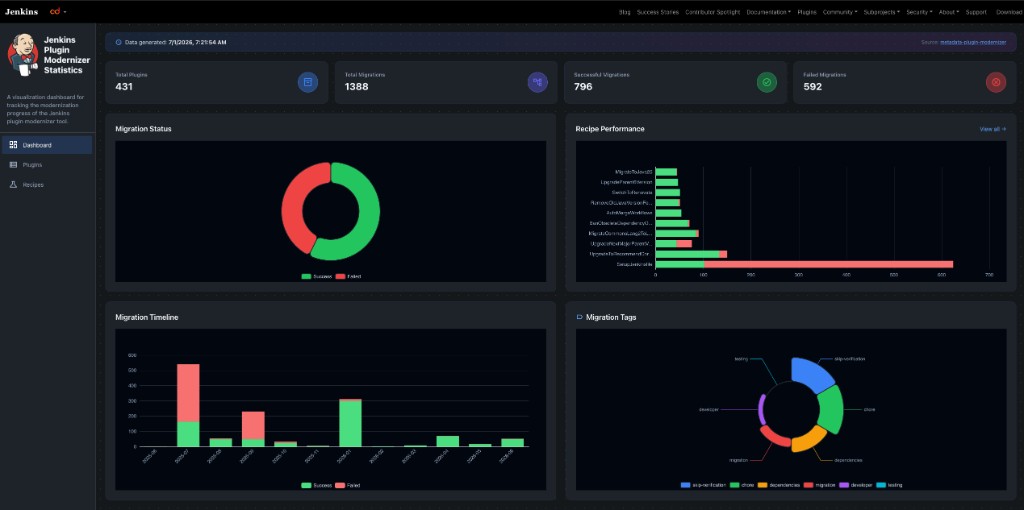
Dashboard (Home Page): Implemented summary stat cards showing total plugins, total migrations, successes and failures. Added a migration status donut chart, recipe performance bar chart, migration timeline trend and tag distribution visualization.
-
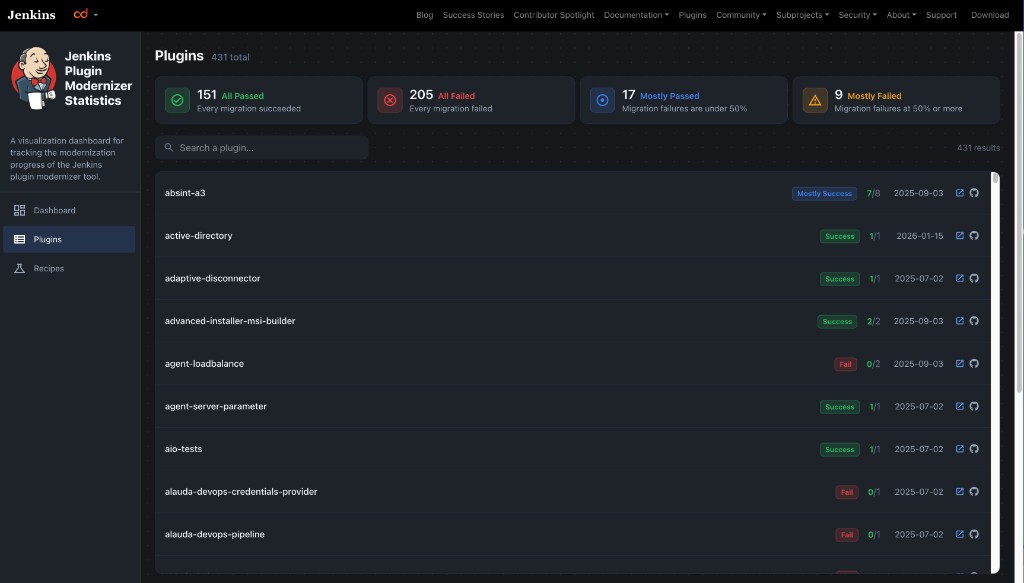
Plugin List Page: A searchable table of all 431 plugins with status badges (All Passed, All Failed, Mostly Passed, Mostly Failed), migration ratios, last updated dates and direct links to plugin pages and GitHub repositories.
Check out the live demo to see the current state of the project.
What I’ve Learned
Beyond the technical skills, this first half of GSoC has taught me a lot about how open source really works. It is not just about writing code, it is about collaboration, transparency and shared ownership.
The community bonding period set a strong foundation. My organization held introductory meetings even before bonding started and my mentors quickly scheduled syncs to discuss the proposed solution and finalize the plan. Since the initial phase depended on inputs from the infra team, I joined their meetings early and we collectively chose the best architectural approach switching from reports.jenkins.io to GitHub Pages for deployment autonomy. Those early decisions saved me weeks of rework once the coding period began.
One thing that stands out about Jenkins as an organization is how well documented it is, how responsive the mentors are and how genuinely welcoming the community is to newcomers.
I chose Jenkins for exactly these reasons before GSoC and that impression has only strengthened over the past two months.
Challenges I Faced
Understanding a project ecosystem that has been evolving for years with multiple interconnected repositories was the steepest learning curve. Navigating the metadata structures, understanding how the plugin modernizer tool produces its output and mapping that to a useful visualization schema required significant upfront effort.
Maintaining consistency was another challenge: picking up issues, debugging, submitting fixes, iterating on mentor feedback and repeating that cycle week after week while also managing my internship at Red Hat. Balancing both commitments demanded careful time management but the structured twice a week meetings with my mentors kept me on track and ensured I was never stuck for long.
What’s Next?
-
Per-Plugin Detail Pages: Adding dedicated pages for each plugin with migration timelines, recipe breakdowns, PR history and failure details.
-
Per-Recipe Reports: Detail pages showing application trends, success/failure rates and the list of affected plugins for each recipe.
-
UI/UX improvements: Iterating on the dashboards based on community feedback adding more interactive filters and drill-downs.
-
Stability & Documentation: Comprehensive testing, developer documentation and a final blog post.
Acknowledgements
A huge thank you to my mentors Valentin Delaye, Kris Stern, Sridhar Sivakumar and Raunak Madan for their constant support, responsiveness and timely reviews. They conduct meetings with me twice a week, are always reachable on Slack and actively review my pull requests. In short, they ensure I am never blocked and that makes all the difference.
I’d also like to thank the organization admins for always checking in and offering help.
Excited for the second half of GSoC!
About the author